
How to Unclog a Slow Bathroom Sink Drain
Clear a slow bathroom sink caused by hair and soap buildup using simple mechanical cleaning. This guide covers the stopper and trap area; stop if the drain is fully blocked, leaking, or the plumbing is damaged.
Updated
What you need
Tick off what you already have.
Tools
Materials
 AI illustration
Step 01 / 05
Check the drain and protect the area
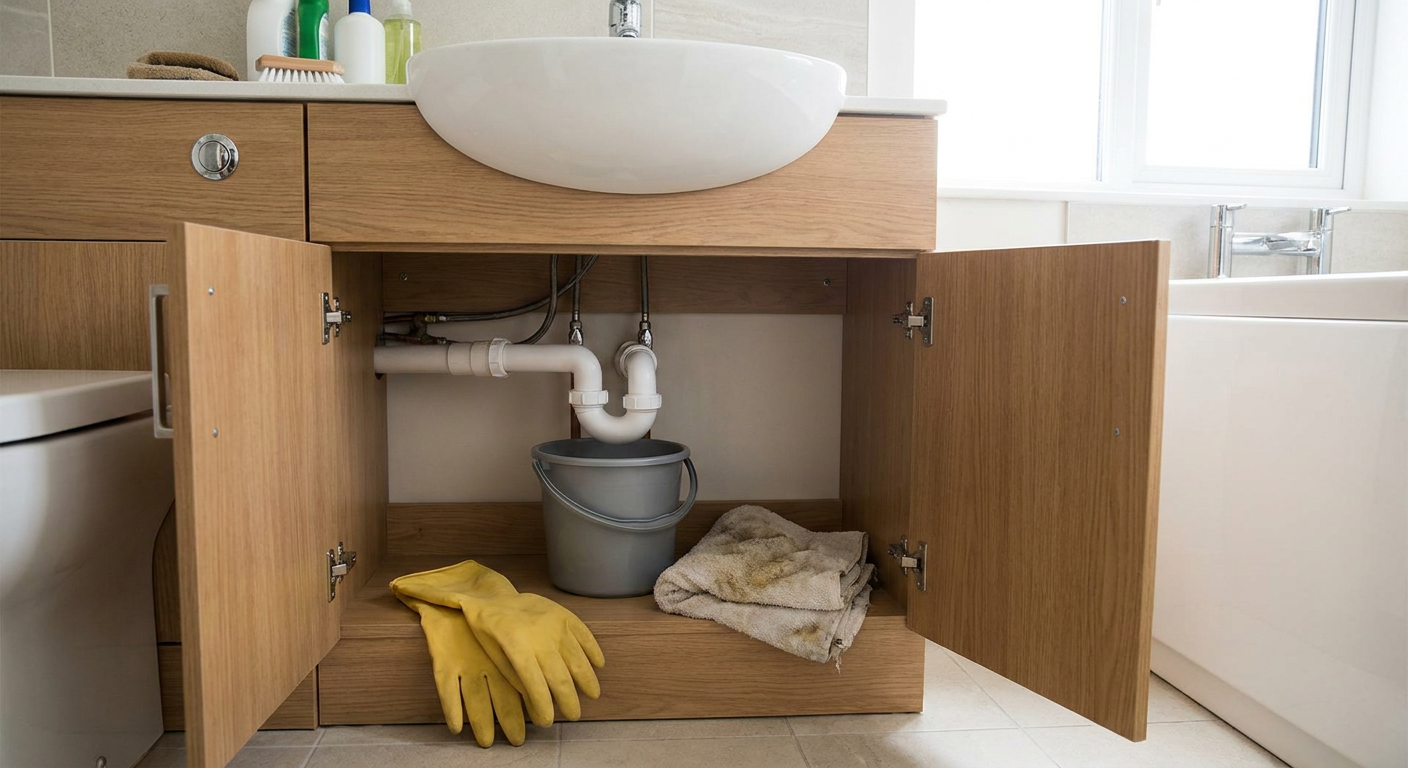
Remove items from beneath the sink and place a bucket and old cloth below the trap. Put on gloves. Run a small amount of water to confirm that the sink drains slowly rather than being completely blocked. If water is leaking from the plumbing, the pipes are damaged, or sewage is backing up elsewhere, stop and address that problem instead.
1. Check the drain and protect the area
Instructional illustration generated with AI for Howmigo. Remove items from beneath the sink and place a bucket and old cloth below the trap. Put on gloves. Run a small amount of water to confirm that the sink drains slowly rather than being completely blocked. If water is leaking from the plumbing, the pipes are damaged, or sewage is backing up elsewhere, stop and address that problem instead.
2. Remove and clean the stopper
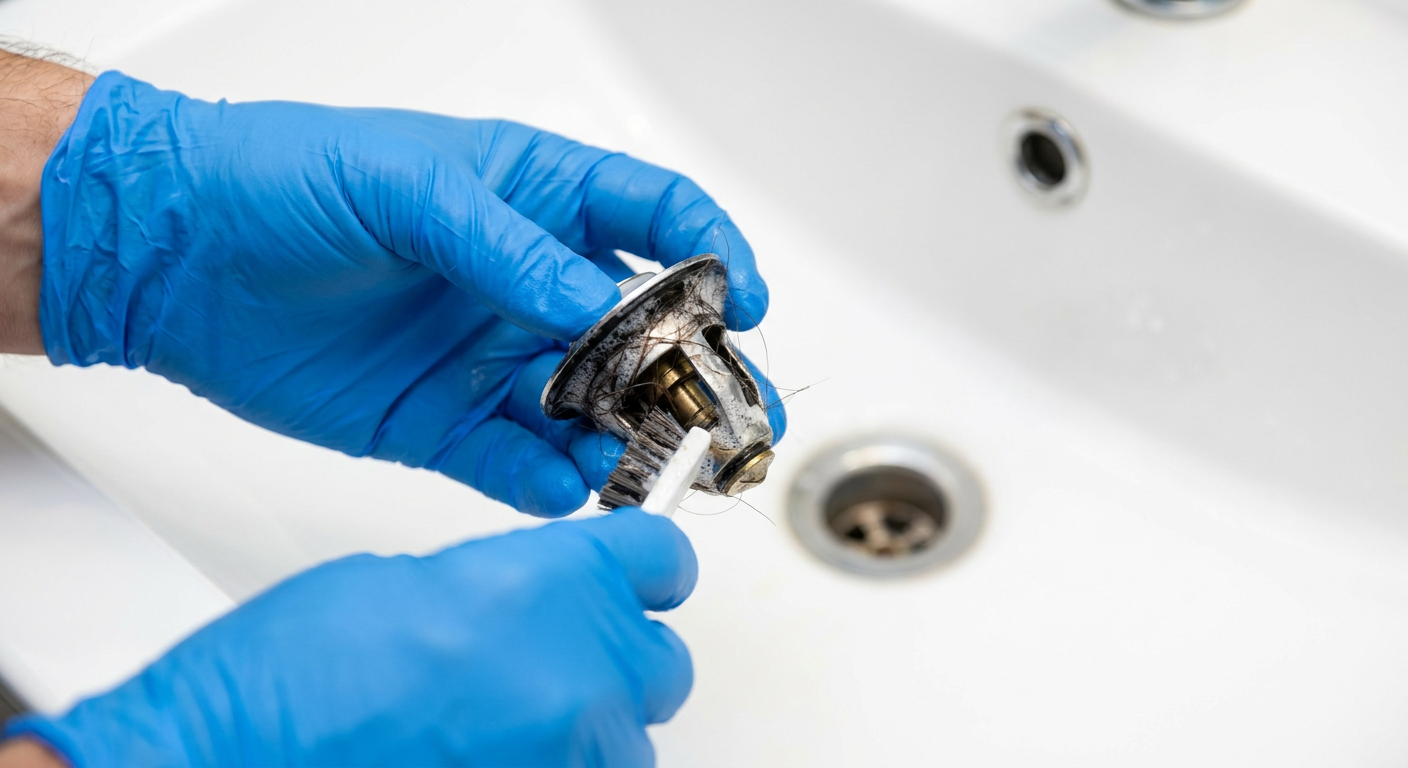
Instructional illustration generated with AI for Howmigo. Lift out the stopper if it is designed to pull free. For a pivot-rod stopper, place the bucket below, loosen the retaining nut at the rear of the drain body, withdraw the pivot rod carefully and lift the stopper out from above. Remove hair and soap buildup, clean the stopper, then temporarily refit it or leave the opening accessible for the next step.
3. Plunge the drain
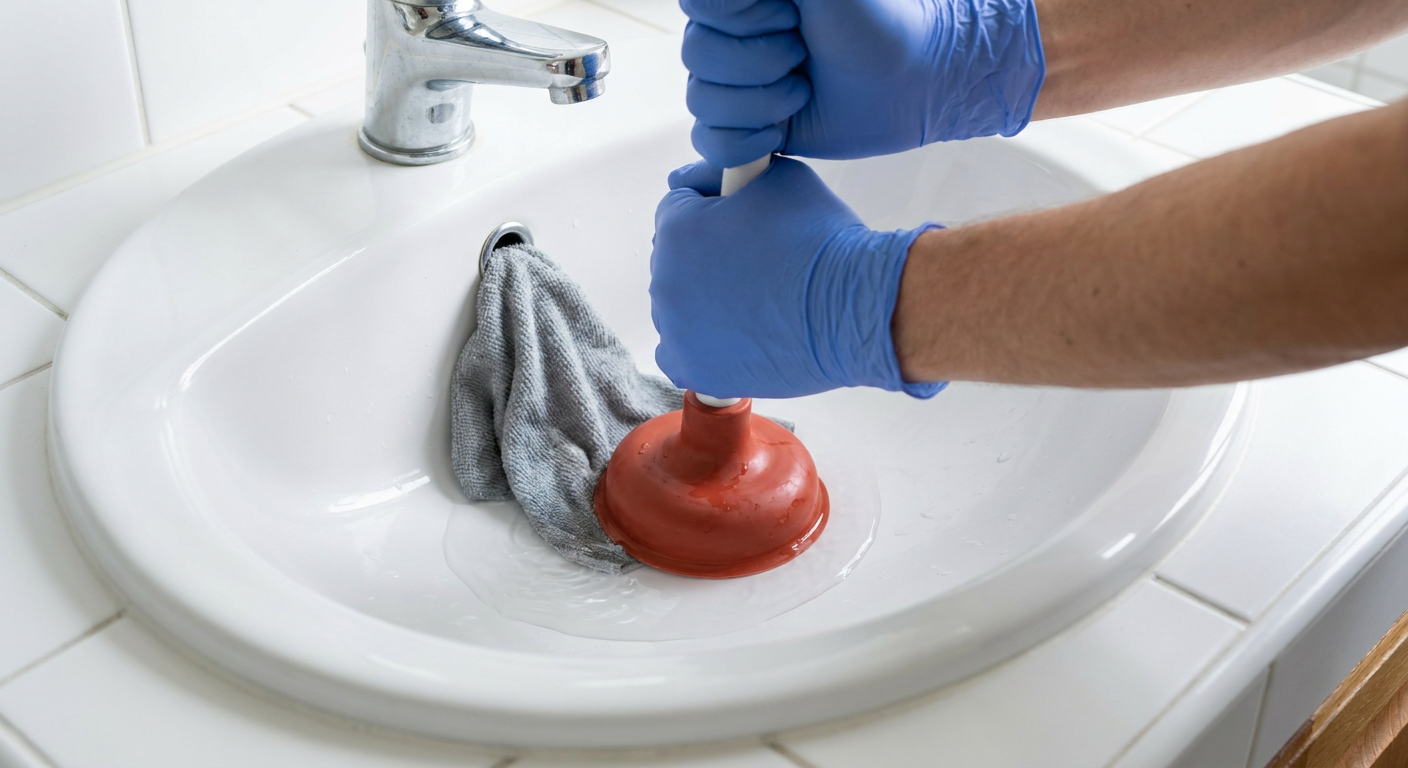
Instructional illustration generated with AI for Howmigo. Block the sink overflow opening firmly with a wet cloth so the plunger can build pressure. Add enough water to cover the plunger cup. Center a sink plunger over the drain and make several controlled up-and-down strokes while maintaining the seal. Remove the plunger and check whether the water now drains freely. Repeat once if needed.
4. Clean the P-trap if the drain is still slow
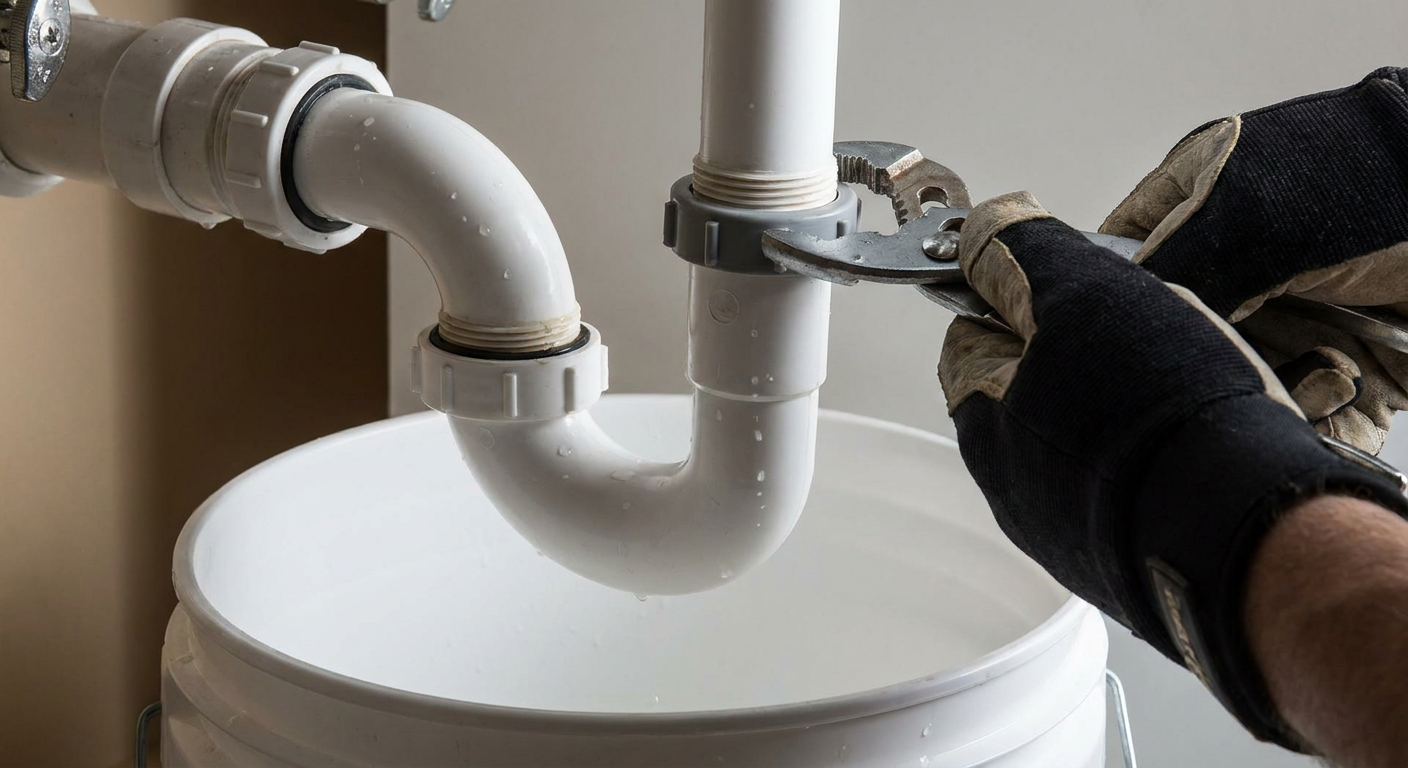
Instructional illustration generated with AI for Howmigo. If plunging does not restore normal flow, keep the bucket under the curved P-trap. Loosen the slip nuts by hand or gently with slip-joint pliers, supporting the trap as you work. Lower it into the bucket, remove debris and rinse it. Do not force corroded, glued or damaged fittings; if they will not loosen normally, stop rather than breaking the pipe.
5. Reassemble and test for leaks
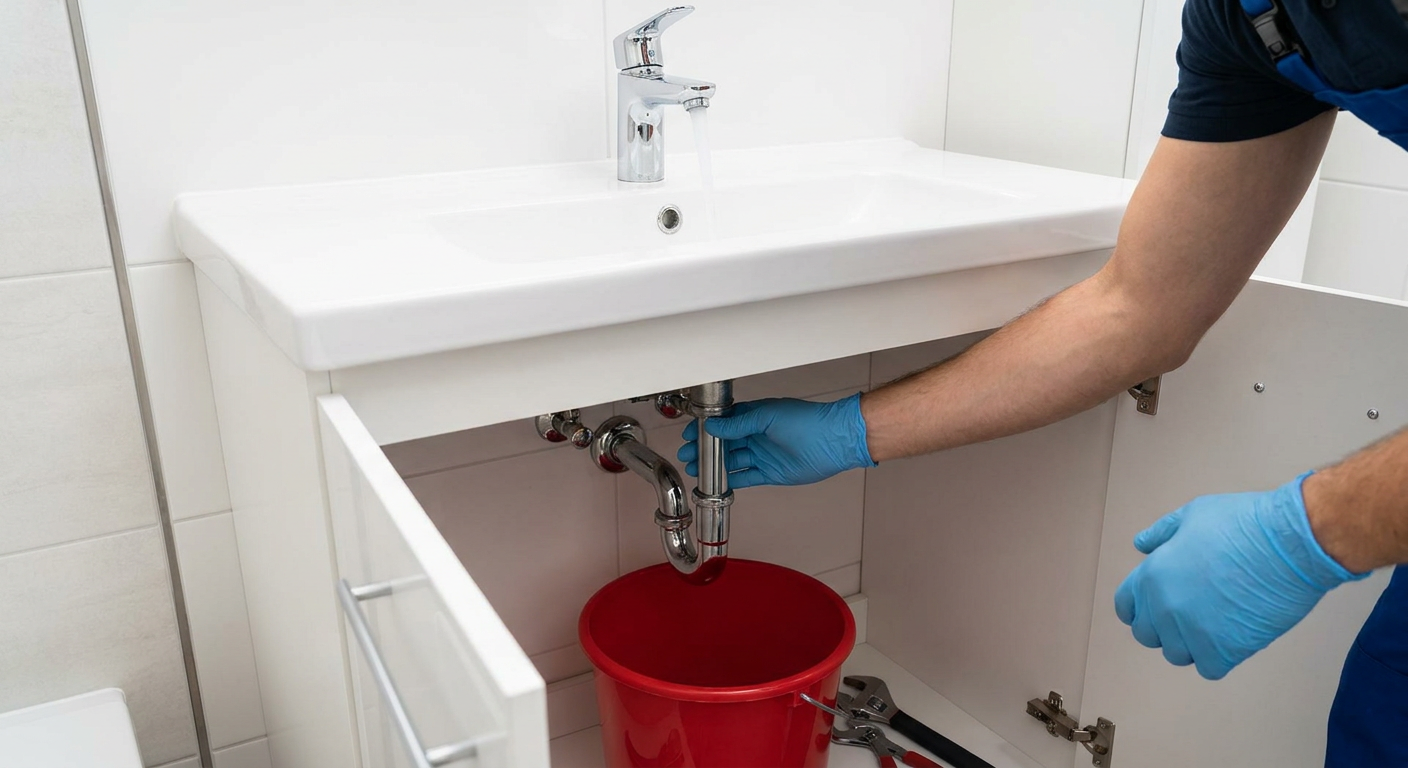
Instructional illustration generated with AI for Howmigo. Reinstall the P-trap in its original orientation, making sure washers and slip nuts seat correctly. Refit the stopper and pivot rod if removed. Tighten slip joints snugly without overtightening. Run water for several minutes while watching and feeling every disturbed joint for drips. If the sink remains slow after the stopper and trap are clear, the blockage may be farther down the drain and may require a suitable drain snake or professional service.
Common questions & troubleshooting
Did this guide help you?
Was this guide useful?
Discussion
No comments yet
Ask a question, share a tip, or reply to someone else.
Sign in to commentLoading comments…