
How to Unclog a Shower Drain
Clear a slow shower drain caused by accessible hair and soap buildup using simple mechanical cleaning. This guide covers removable drain covers and reachable debris, not chemical drain cleaners or dismantling plumbing.
Updated
What you need
Tick off what you already have.
Tools
Materials
 AI illustration
Step 01 / 06
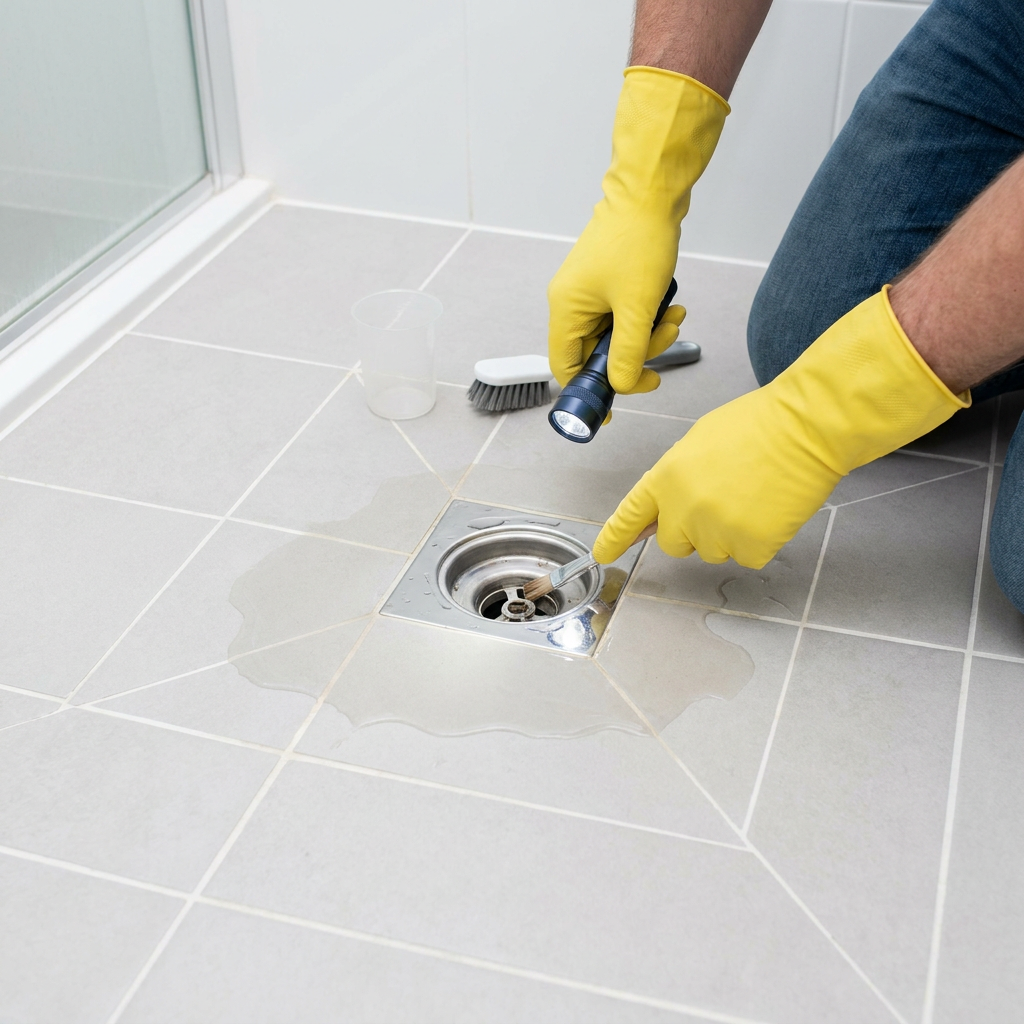
Check the blockage and prepare safely
Stop using the shower and let standing water drain as much as possible. If several fixtures drain slowly, sewage backs up, there is a strong sewer smell, or water leaks outside the shower, stop and contact a plumber: the blockage may be deeper in the system. Never add drain-cleaning chemicals. If any chemical cleaner has already been used, do not reach into the drain or mix products; follow its label and seek professional help. Put on rubber gloves and protect the surrounding floor.
1. Check the blockage and prepare safely
Instructional illustration generated with AI for Howmigo. Stop using the shower and let standing water drain as much as possible. If several fixtures drain slowly, sewage backs up, there is a strong sewer smell, or water leaks outside the shower, stop and contact a plumber: the blockage may be deeper in the system. Never add drain-cleaning chemicals. If any chemical cleaner has already been used, do not reach into the drain or mix products; follow its label and seek professional help. Put on rubber gloves and protect the surrounding floor.
2. Remove the drain cover carefully
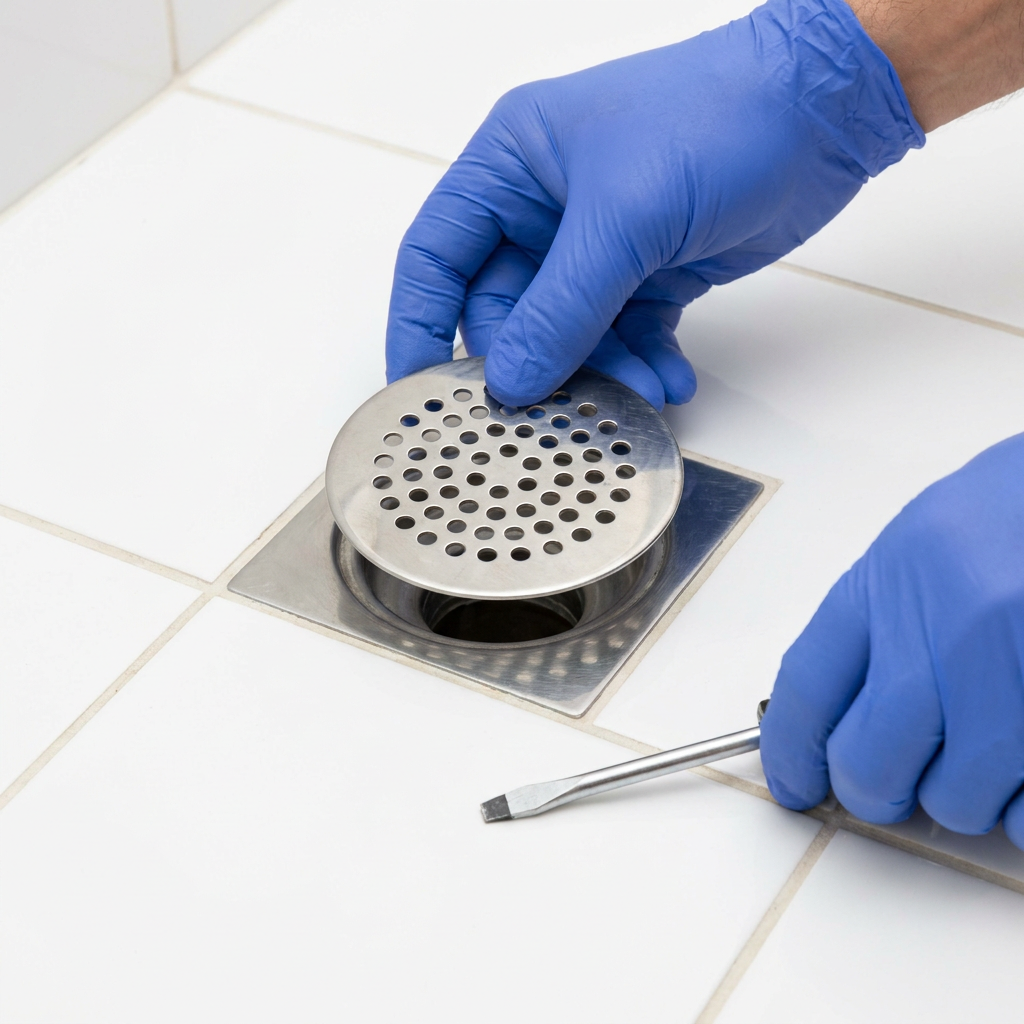
Instructional illustration generated with AI for Howmigo. Check how the cover is attached. Lift a loose cover or undo its retaining screw with the correct screwdriver, keeping the screw safe. Do not force a sealed, glued or unfamiliar cover. Use a flashlight to look into the opening. Note the position of any removable hair catcher or trap insert so it can go back the same way.
3. Lift out visible hair and debris
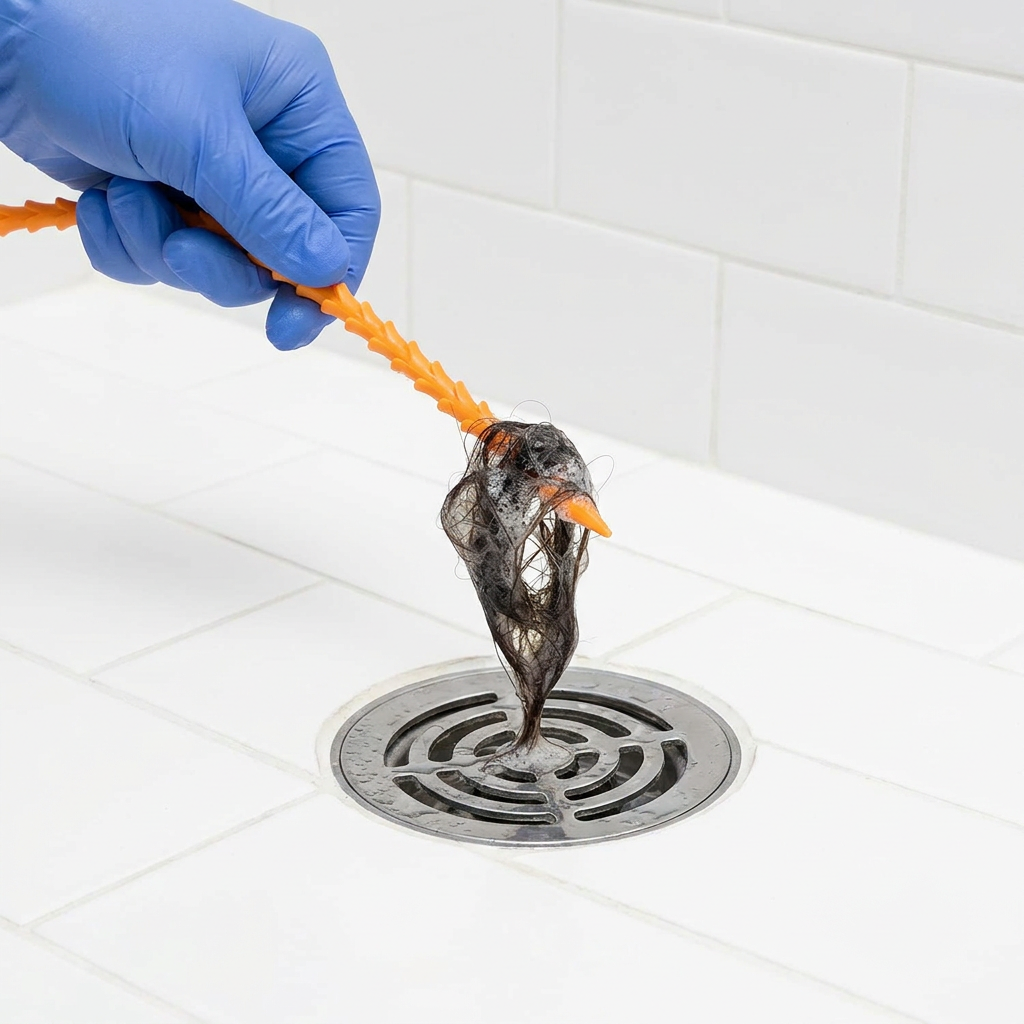
Instructional illustration generated with AI for Howmigo. Pull out accessible hair and soap residue with gloved fingers or a flexible plastic hair-removal tool. Work gently near the opening without forcing the tool deep into the pipe. Do not use sharp metal hooks, push the blockage farther down, or disturb fixed plumbing. Put the debris into a paper towel and dispose of it in the bin, not the toilet.
4. Clean the cover and accessible insert
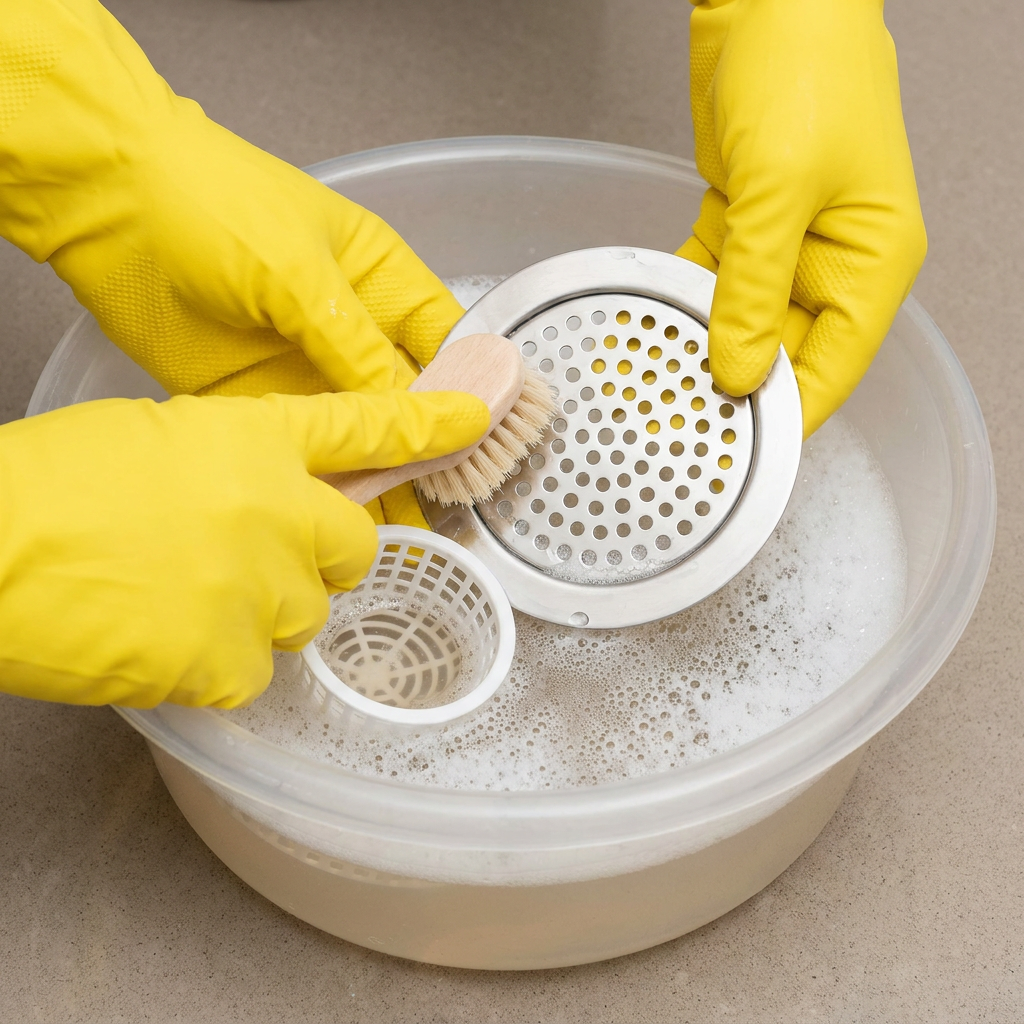
Instructional illustration generated with AI for Howmigo. If the drain has a removable hair catcher or trap insert designed for user cleaning, take it out according to the manufacturer's instructions. Wash the cover and insert with warm water, a little mild dish soap and a small brush. Do not dismantle fixed pipe connections or remove a water-trap component unless you know how to refit it correctly. Keep seals in place and inspect them for damage.
5. Reassemble and test the flow
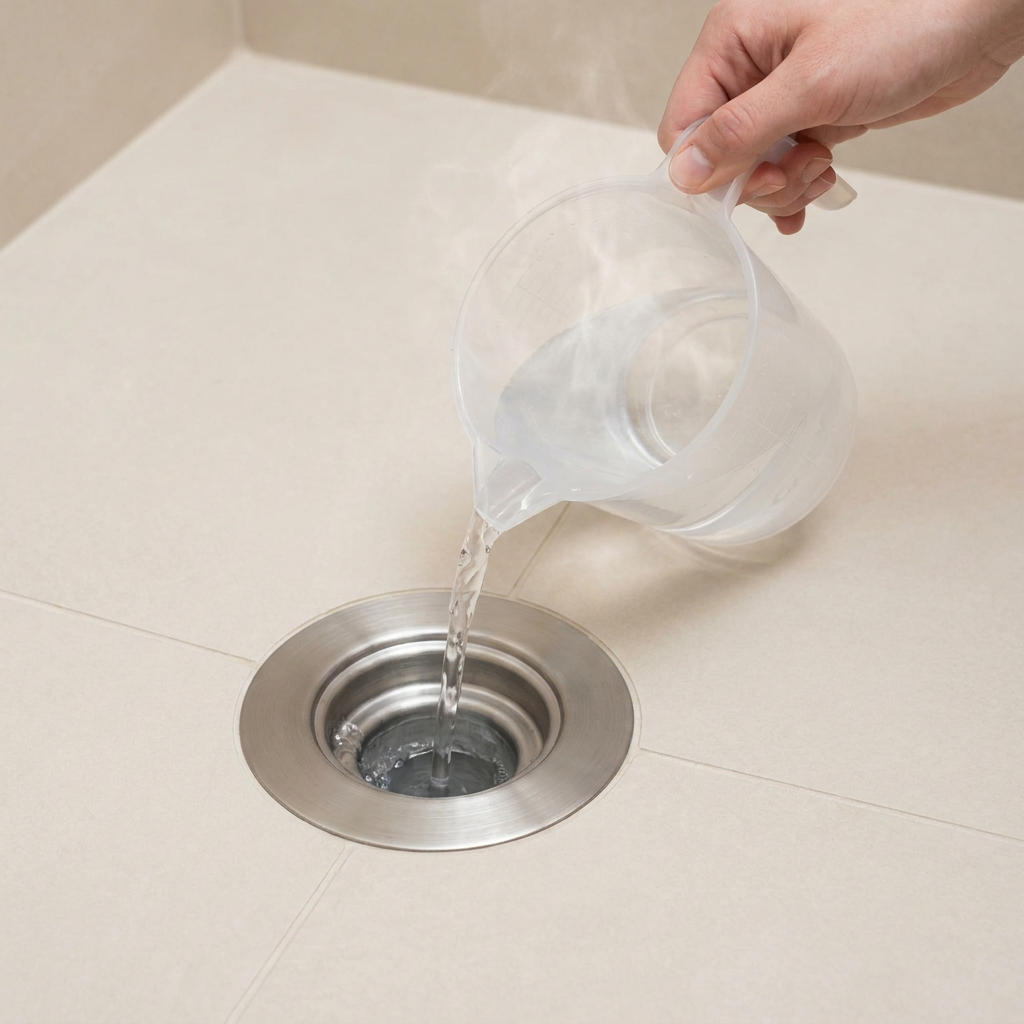
Instructional illustration generated with AI for Howmigo. Refit the insert and cover in their original positions, securing any screw without overtightening. Pour a small jug of warm—not boiling—water into the drain and watch whether it flows away promptly. Check for leaks where visible and make sure the cover sits securely. If water still pools, stop rather than repeatedly probing deeper; a plumber may need to clear the line.
6. Prevent another hair blockage
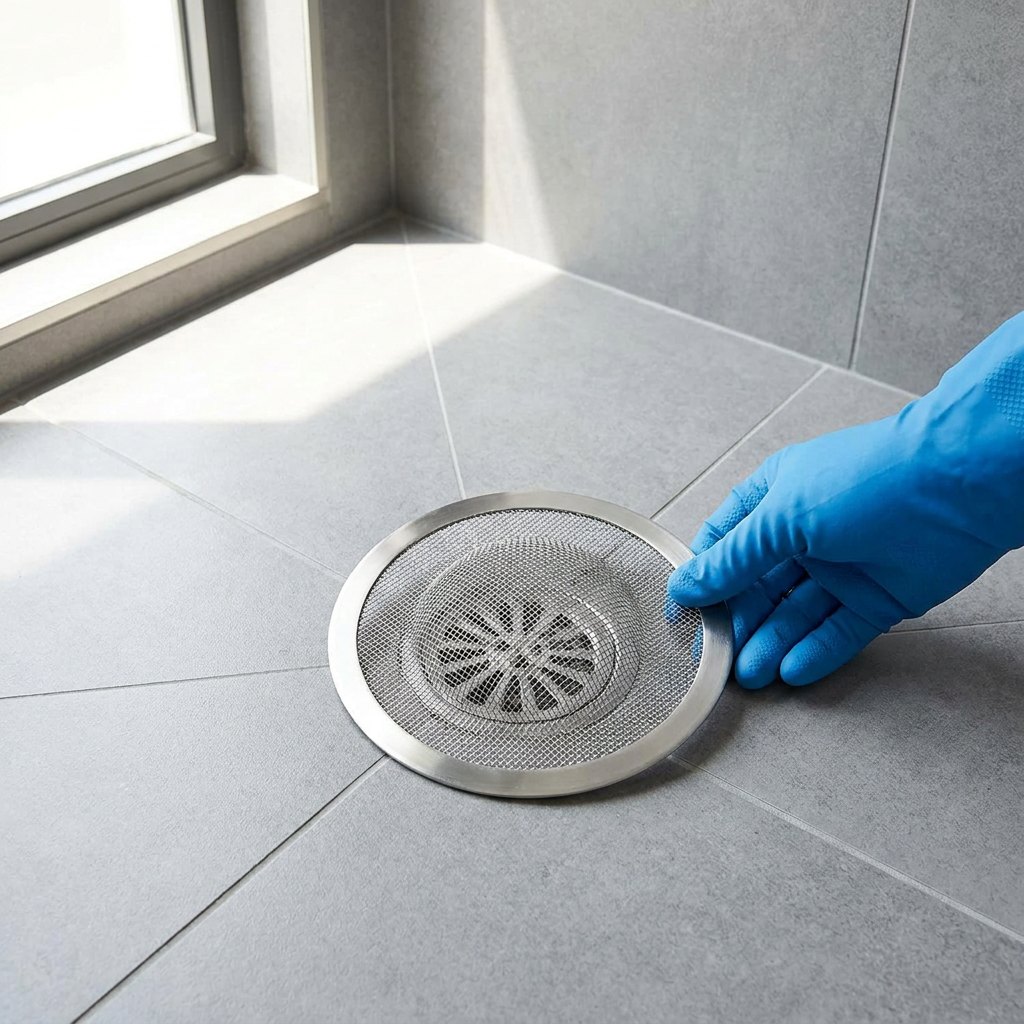
Instructional illustration generated with AI for Howmigo. Fit a compatible removable hair catcher if your shower design allows it, and empty it into the bin regularly. Lift visible hair from the cover after showering and wash accessible parts periodically according to the drain manufacturer's instructions. Avoid pouring grease, thick residues or harsh chemical cleaners into the drain.
Common questions & troubleshooting
Did this guide help you?
Was this guide useful?
Discussion
No comments yet
Ask a question, share a tip, or reply to someone else.
Sign in to commentLoading comments…