
How to Clean a Washing Machine
Clean a front-loading washing machine's detergent drawer, door seal, accessible pump filter and drum to help prevent odors and residue. Follow your model's manual; a cleaning cycle may take additional time.
Updated
What you need
Tick off what you already have.
Tools
Materials
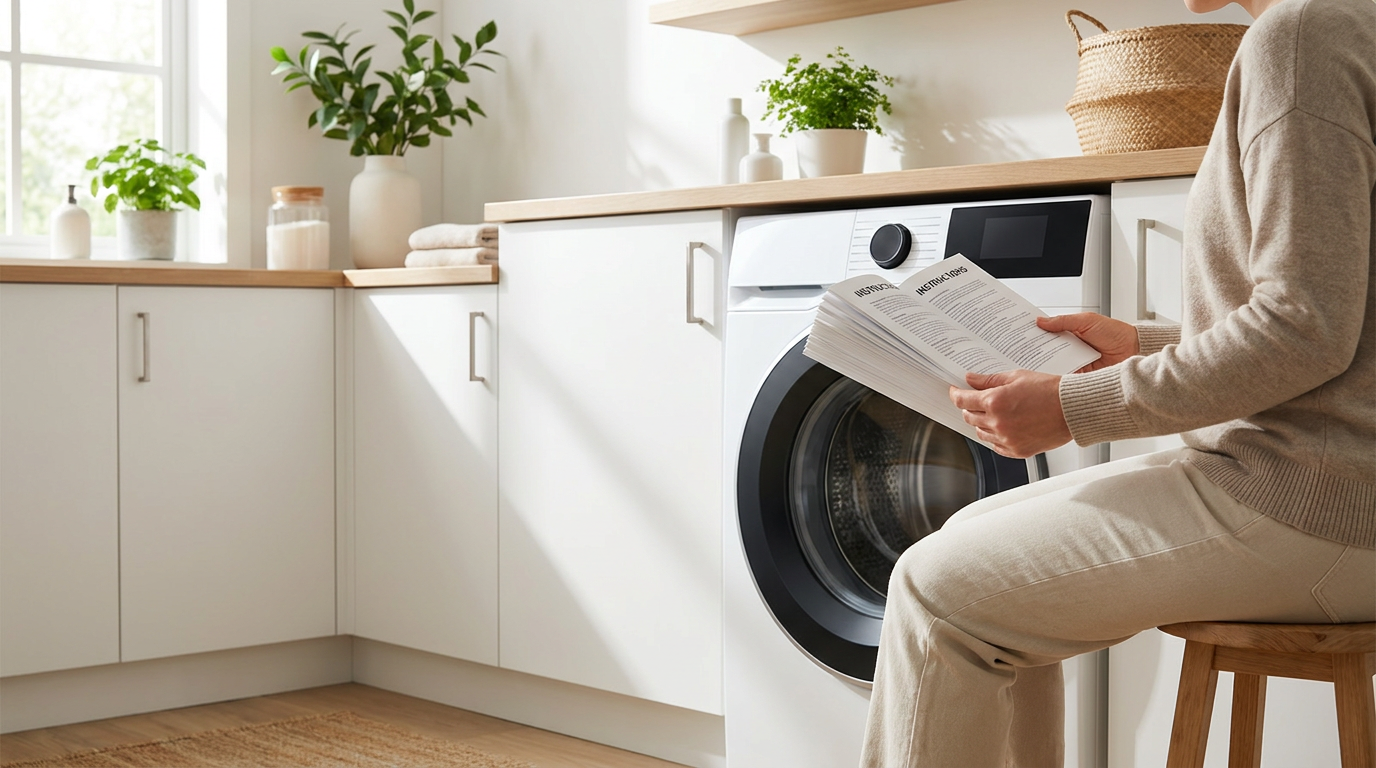 AI illustration
Step 01 / 06
Check the manual and prepare safely
Read your machine's manual, especially instructions for the detergent drawer, pump filter and drum-clean program. This guide focuses on front-loading machines; layouts vary. Stop the machine, unplug it before cleaning accessible parts, and let hot water cool. Never remove panels or electrical components. If there is a leak, electrical fault or persistent error, contact a qualified technician. Do not mix cleaning chemicals, including bleach and vinegar.
1. Check the manual and prepare safely
Instructional illustration generated with AI for Howmigo. Read your machine's manual, especially instructions for the detergent drawer, pump filter and drum-clean program. This guide focuses on front-loading machines; layouts vary. Stop the machine, unplug it before cleaning accessible parts, and let hot water cool. Never remove panels or electrical components. If there is a leak, electrical fault or persistent error, contact a qualified technician. Do not mix cleaning chemicals, including bleach and vinegar.
2. Remove and wash the detergent drawer
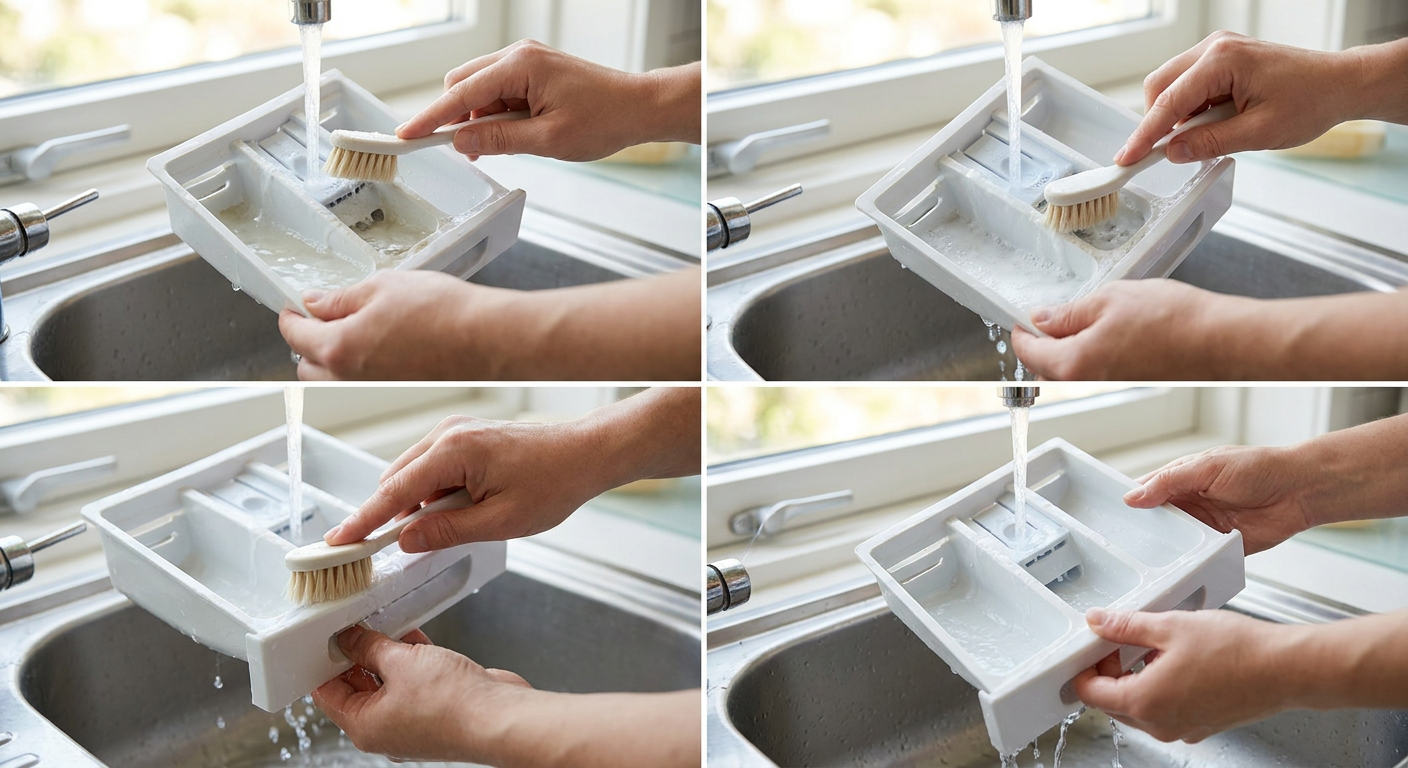
Instructional illustration generated with AI for Howmigo. If the manufacturer allows removal, press the release catch and gently slide out the detergent drawer. Note how its inserts fit. Rinse with warm water and use a soft brush and a little mild dish soap to loosen detergent and fabric-softener residue. Wipe the accessible drawer cavity without flooding it. Refit the inserts and drawer securely; never force a stuck drawer. For a more detailed walkthrough, see how to clean a washing machine detergent drawer.
3. Wipe the door glass and rubber seal
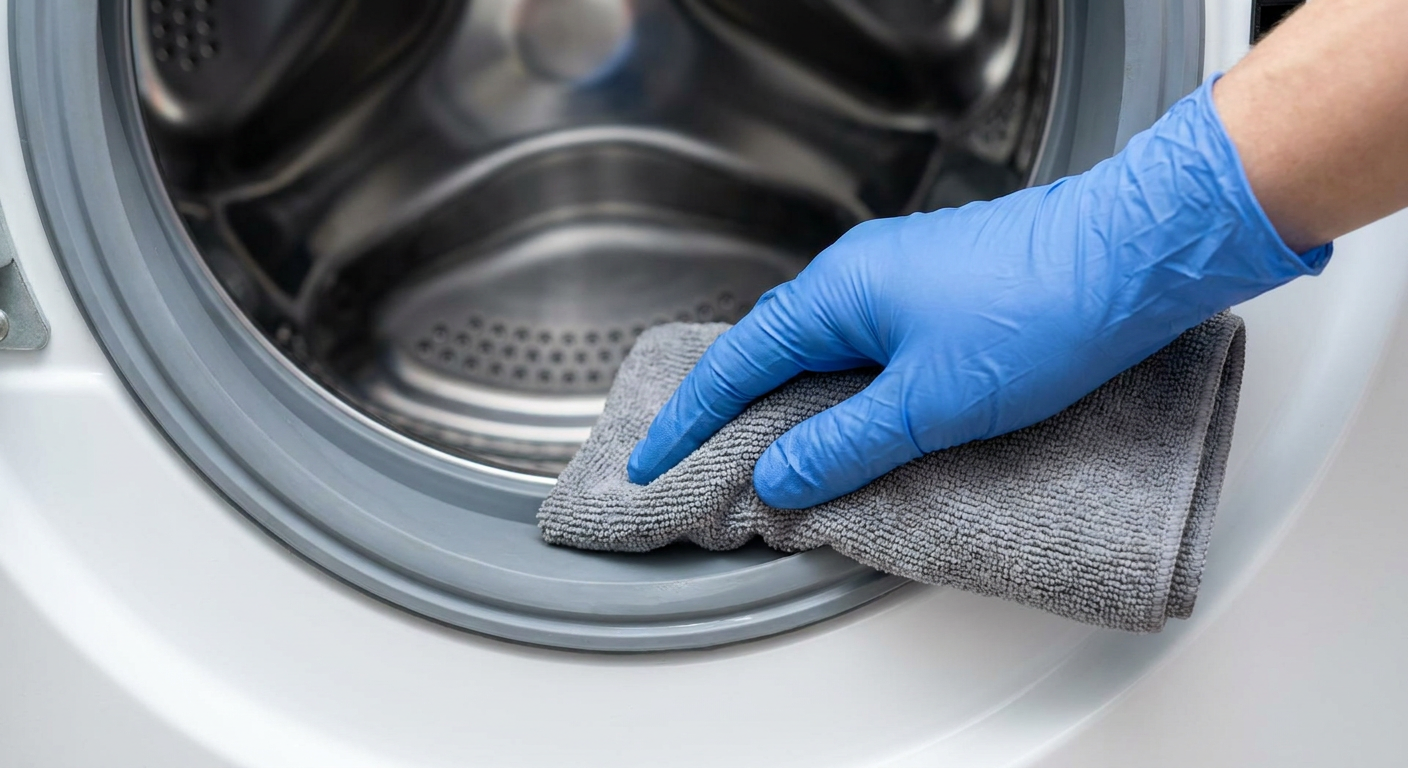
Instructional illustration generated with AI for Howmigo. Open the door and gently inspect the folds of the rubber gasket. Remove lint, hair and small objects using a damp microfiber cloth. Wipe the door glass and seal with warm water and a little mild dish soap if permitted by the manufacturer. Avoid sharp tools, abrasive scrubbers and harsh chemicals that can damage rubber. Dry the folds thoroughly and check for visible cracks or leaks.
4. Clean the accessible pump filter if fitted
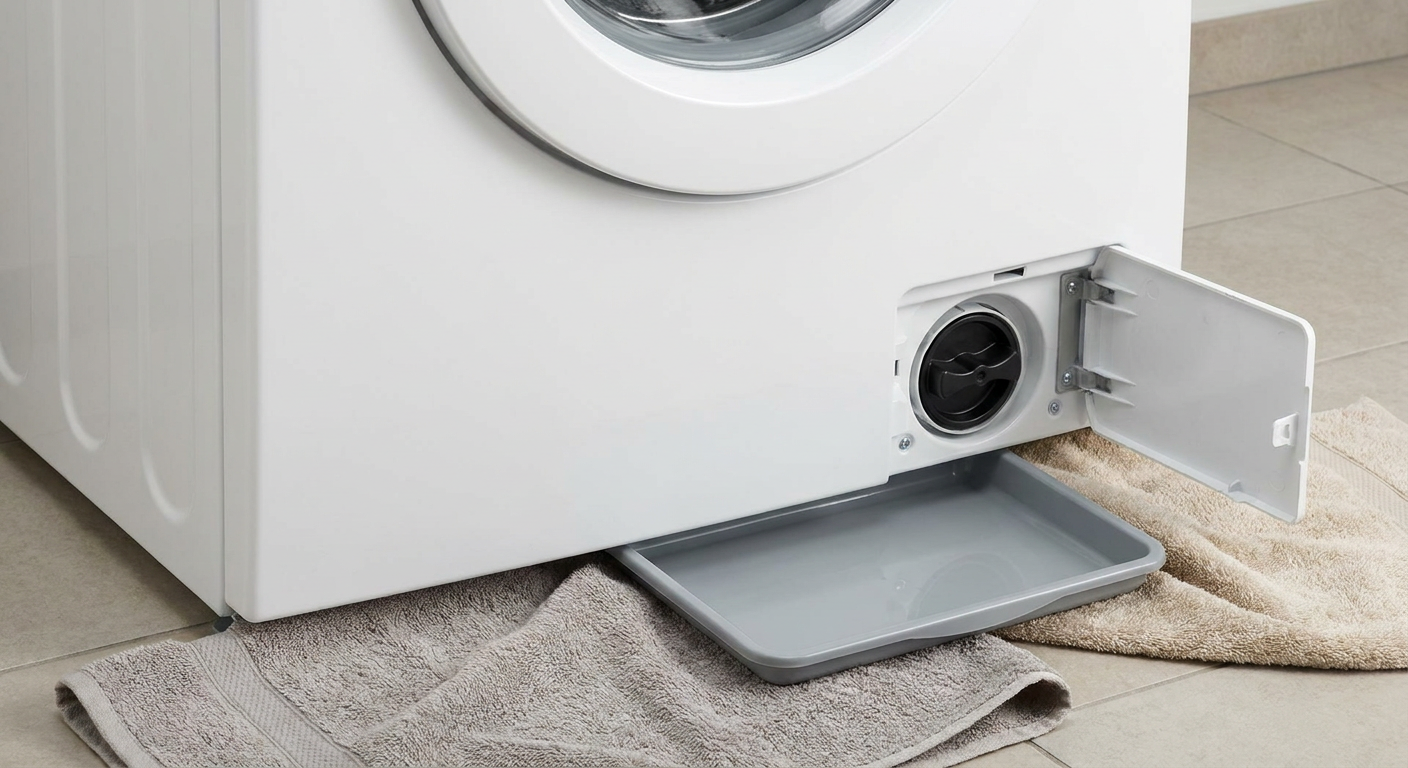
Instructional illustration generated with AI for Howmigo. Only attempt this if your manual identifies a user-serviceable pump filter. With the machine off and unplugged, place towels and a shallow tray beneath the access flap. Follow the model's instructions to drain residual water slowly using its drain hose or filter cap; water may spill. Remove lint and debris from the filter, check its seal, then refit and tighten as instructed. Do not force a filter or open it while water is hot or the drum is full. Some machines have no user-accessible filter.
5. Run the recommended drum-clean cycle
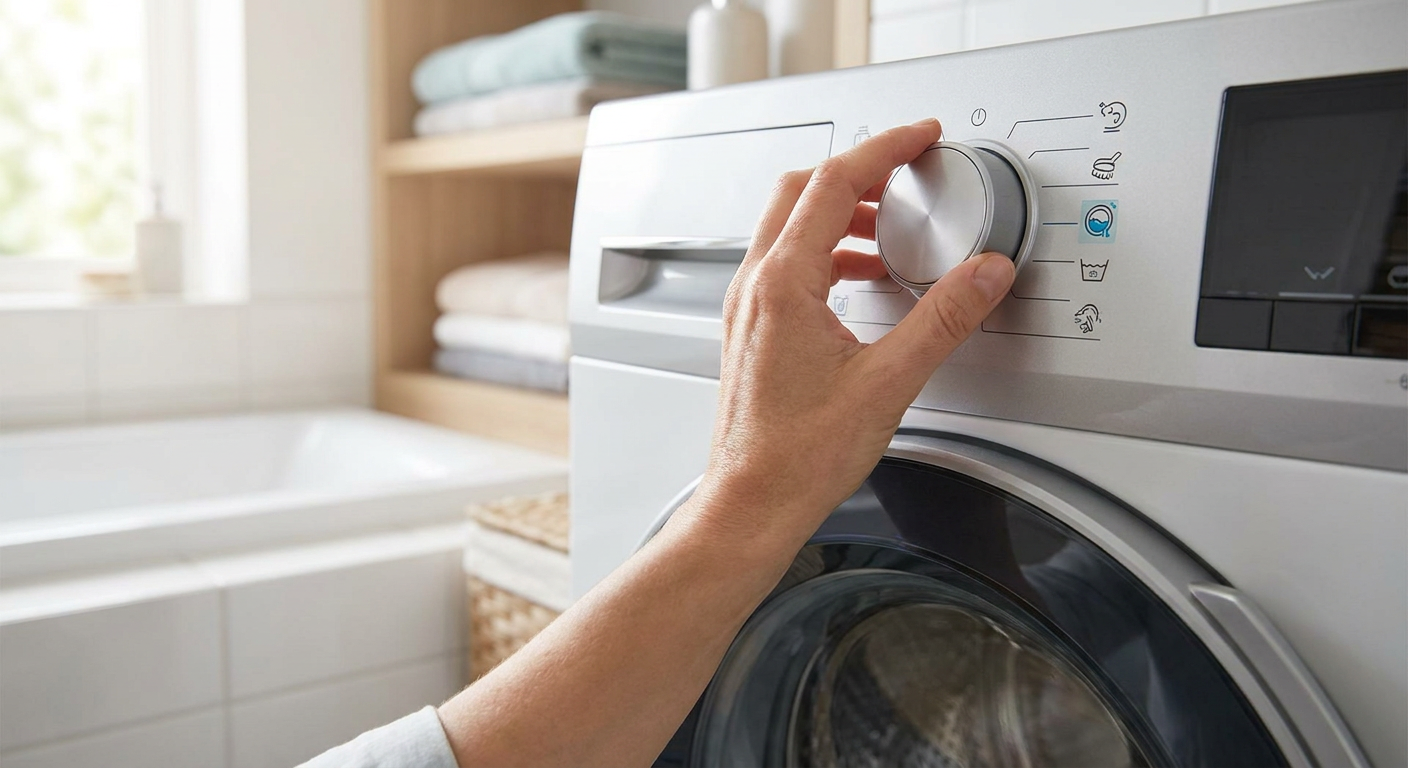
Instructional illustration generated with AI for Howmigo. Make sure the drawer, filter and door seal are reassembled correctly, then reconnect power. With the drum empty, run the machine's dedicated cleaning cycle or the cycle specified in its manual. Add only a manufacturer-approved washing-machine cleaner if directed, in the stated amount and location. Never combine cleaning products, and do not assume vinegar or bleach is suitable for your model. Let the full program finish.
6. Dry, inspect and prevent odors
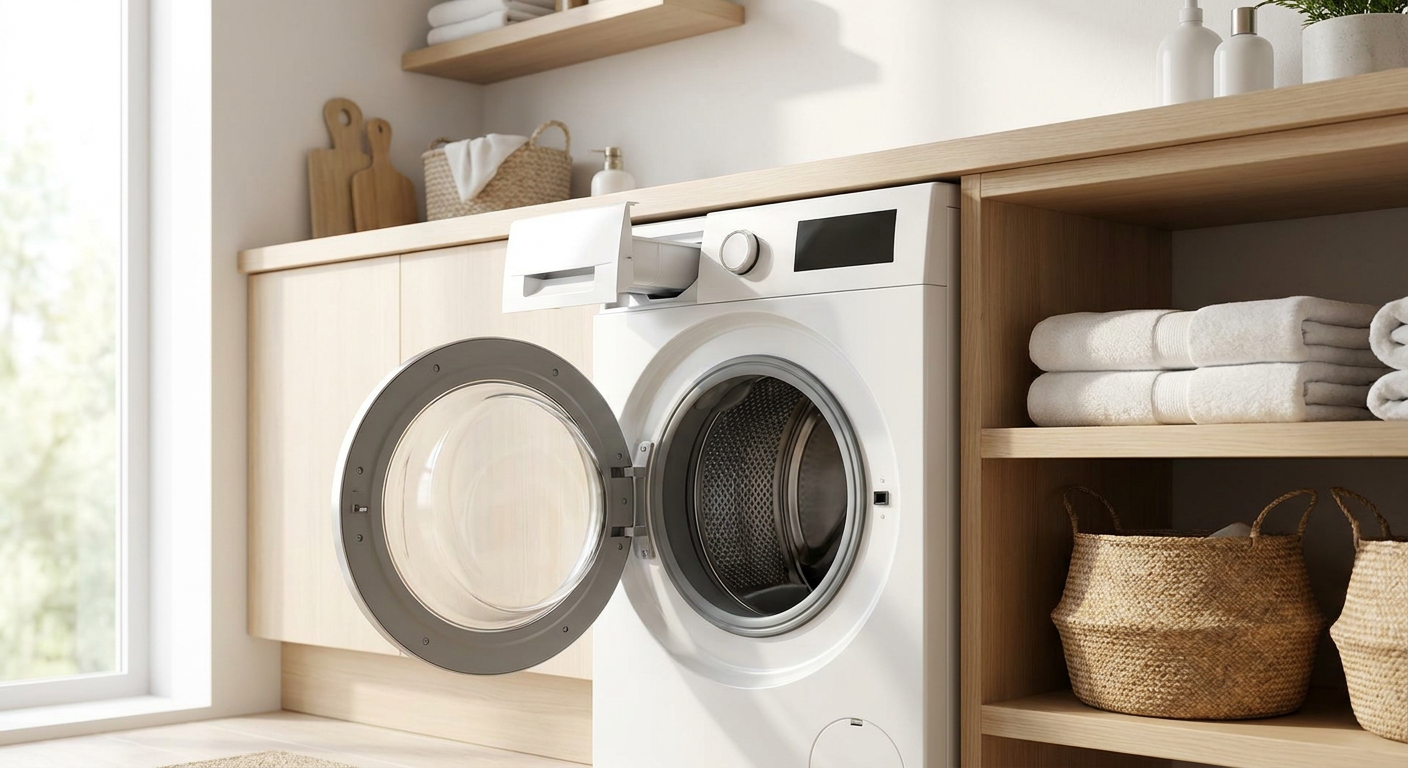
Instructional illustration generated with AI for Howmigo. After the cycle, check around the filter and machine for leaks. Wipe remaining moisture from the door glass and gasket, then leave the door and detergent drawer slightly open to air-dry if safe for children and pets. Remove wet laundry promptly, use the recommended detergent dose and clean the drawer and seal regularly. If strong odors, drainage faults or leaks persist, arrange professional service.
Common questions & troubleshooting
Did this guide help you?
Was this guide useful?
Discussion
No comments yet
Ask a question, share a tip, or reply to someone else.
Sign in to commentLoading comments…